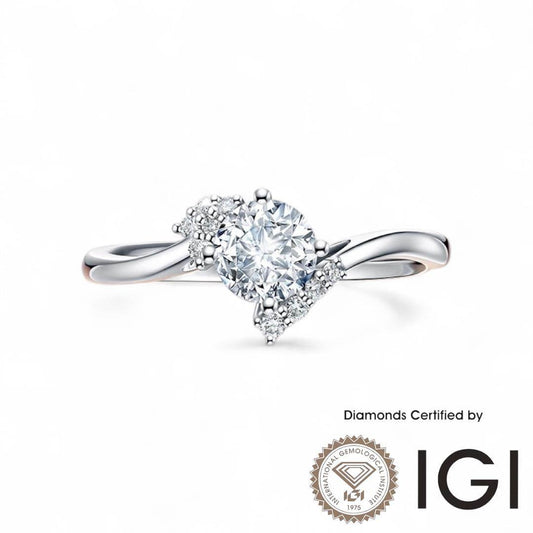
IGI vs GIA: Choosing the Right Diamond Certification for Your Diamond
Diamond Certification Guide
Diamond certification is as important as the 4Cs themselves — cut, clarity, color, and carat. Without an independent grading report, you have no objective proof of what you're buying. This guide explains why IGI is the preferred certification for lab-grown diamonds, when GIA is the right choice for natural diamonds, and how to read each report so you make confident, cost-effective decisions.
By MIHO-IGI Certified Professional
Key Takeaways
- Lab-grown diamonds → choose IGI. Cheaper, faster, and the global standard for lab-grown grading.
- Natural diamonds over 0.5ct → choose GIA. Strictest grading and the highest resale recognition.
- With IGI lab-grown reports, set a quality floor: aim for VVS2 clarity or higher and E color or higher.
- Always verify the certificate on the lab's official report-check tool before paying.
1. What a Diamond Certificate Actually Is
A diamond certificate (also called a grading report) is an independent assessment of a diamond's physical and optical characteristics, issued by a gemological laboratory. It is not an appraisal and does not state a price — it documents the facts so that the price can be judged fairly.
A reliable lab-grown diamond report should include the following:
Origin & Type
Confirms the diamond is laboratory-grown and identifies the growth method (HPHT or CVD).
The 4Cs
Carat weight, color grade, clarity grade, and cut grade — measured to lab-controlled standards.
Proportions & Finish
Polish, symmetry, fluorescence, measurements, and a plotted clarity diagram for traceability.
Every diamond sold by MadisonDia is accompanied by an IGI or GIA report, and the certificate is emailed to you before the diamond is dispatched.
2. Why IGI Is the Preferred Choice for Lab-Grown Diamonds
The International Gemological Institute (IGI) grades the majority of the world's lab-grown diamonds. They have processed millions of stones, built dedicated lab-grown grading protocols years before competitors did, and operate large screening labs near every major manufacturing hub. For lab-grown specifically, IGI is the practical industry default.
IGI
International Gemological Institute
- Cost-efficient: certification fees are a fraction of GIA's, savings passed to the buyer.
- Faster turnaround: reports issued in days rather than weeks.
- Lab-grown expertise: the largest grading volume for CVD and HPHT diamonds in the industry.
- Type disclosure: reports state "Laboratory Grown" plainly and include growth-method screening.
GIA
Gemological Institute of America
- Gold standard for natural diamonds: the strictest grading discipline in the trade.
- Highest resale recognition: dealers and auction houses default to GIA.
- Premium fees & timelines: significantly more expensive and slower than IGI.
- Limited lab-grown share: grades lab-grown but is rarely chosen for them.
To make the most of an IGI lab-grown diamond, buyers should treat the report as a guide and apply a sensible quality floor: VVS2 clarity or higher and E color or higher. We explain why below.
3. Grading Scale Comparison: How IGI and GIA Differ
IGI's grading scale is internationally recognized but, in practice, runs slightly more lenient than GIA's for both clarity and color. Industry consensus places the gap at roughly one grade. The table below shows approximate equivalents:
| GIA Grade | Approximate IGI Equivalent | What It Means For You |
|---|---|---|
| SI1 | VS2 | Inclusions may be visible without magnification. |
| VS1 | VS1-VVS2 | Inclusions visible only under 10x — generally eye-clean. |
| VVS2 | VVS1+ | Inclusions extremely difficult to see under 10x. |
| F color | G color | Faint warm tint possible when set in white metal. |
| E color | F color (IGI) | Virtually colorless, suitable for any setting. |
The takeaway: an IGI "VVS2 / E" lab-grown diamond is roughly equivalent in real-world appearance to a GIA "VS2 / F" — still a beautiful, eye-clean stone. This is exactly the level you want to target.
4. Feature-by-Feature: IGI vs GIA
The right certificate depends on what you're buying. The table below summarizes the practical differences:
| Feature | IGI | GIA |
|---|---|---|
| Primary Use | Lab-grown and natural diamonds | Natural diamonds (lab-grown available but uncommon) |
| Clarity & Color Grading | Slightly more lenient — choose VVS2+ and E+ | Strict and conservative — closest to true market value |
| Cost | Lower per-stone fee | Significantly higher |
| Turnaround | Days | Weeks |
| Lab-Grown Expertise | Extensive — the industry leader by volume | Limited share, less specialised |
| Market Recognition | Recognized worldwide; resale strongest at VVS2+ / E+ | The global benchmark, especially for resale |
| Report Plotting | Included on most reports above 0.5ct | Included on all full reports |
5. Why VVS2+ Clarity and E+ Color Matter for IGI Lab-Grown Diamonds
Because IGI grading runs slightly looser than GIA, setting a quality floor protects you from disappointing stones. Aiming for VVS2 or higher clarity and E color or higher gives you three things at once:
Eye-Clean Guarantee
Higher clarity compensates for IGI's lenient grading and ensures the stone is truly clean to the naked eye.
True Colorless Look
E or higher reads as fully white in every setting — yellow, rose, or platinum.
Smart Value
Premium quality at IGI pricing — you pay lab-grown rates without sacrificing the look of a flawless stone.
Caution: Avoid IGI lab-grown diamonds graded VS1 or lower in clarity, or F or lower in color. Because of the grading gap, these stones may look noticeably below their report grade in person, and their resale value is significantly weaker than higher-quality stones.
MadisonDia standard: every finished piece and every loose stone we sell is D color / VVS clarity / 3EX cut — a deliberate "no compromises" floor, certified by IGI or GIA before shipping.
6. GIA: The Gold Standard for Natural Diamonds
For natural diamonds, GIA remains unmatched. Its grading discipline is the strictest in the trade, and dealers, insurers, and auction houses default to GIA reports when assessing value. GIA is the right choice when you are buying:
Natural ≥ 0.5ct
Where grading precision starts to materially affect price.
Investment Stones
Long-term holds where resale recognition is essential.
High-Value Centers
Engagement-ring solitaires where exact grading drives perceived value.
For lab-grown diamonds, however, paying GIA's premium delivers no functional benefit — the stone is still lab-grown, the resale market is still developing, and the cost difference is better invested in a higher clarity/color floor on an IGI report.
Learn more at the GIA Official Website.
7. How to Read Your Certificate in 30 Seconds
Whether you receive an IGI or GIA report, scan it in this order:
| Step | What to Check | Why It Matters |
|---|---|---|
| 1. | Report number & date | Used to verify the report on the lab's website. |
| 2. | Origin: "Laboratory Grown" or "Natural" | Confirms what you're paying for. |
| 3. | Shape & measurements | Match these against the stone you receive. |
| 4. | Carat weight, color, clarity, cut | The 4Cs — confirm they match your order. |
| 5. | Polish & symmetry (both ideally "Excellent") | Drives real-world sparkle far more than people expect. |
| 6. | Fluorescence (None or Faint preferred) | Strong fluorescence can affect appearance in sunlight. |
| 7. | Laser inscription number on the girdle | Lets you match the report to the physical stone. |
For a deeper walkthrough of grading terminology, see our Complete Lab-Grown Diamond Guide.
8. Verify Every Certificate Before You Pay
Counterfeit reports exist, and serial numbers can be cloned. Both labs offer free, instant online verification. Always confirm the report on the lab's official portal — never trust a PDF or printed certificate alone.
Quick Decision Guide
Buying a diamond this month? Use this shortcut:
If Lab-Grown
Choose an IGI-certified stone at VVS2+ clarity and E+ color. Verify on igi.org before payment.
If Natural (≥ 0.5ct)
Choose a GIA-certified stone. Confirm polish and symmetry are both "Excellent", and verify on gia.edu.
Every MadisonDia Diamond, Independently Certified
Every MadisonDia lab-grown diamond is graded by IGI or GIA at D color, VVS clarity, and 3EX (Excellent cut, polish, symmetry). The certificate is emailed to you before dispatch, so you can verify the report number on the lab's official site before the stone leaves our workshop.
Shop Certified Lab-Grown Diamonds9. Conclusion
- Lab-grown diamonds → IGI is the right certification. Target VVS2+ clarity and E+ color to lock in eye-clean, colorless quality at the best price.
- Natural diamonds → GIA is the gold standard, especially above 0.5 carats where grading precision drives both look and resale value.
- Always verify the report number on the lab's official portal before completing payment.
Smart certification choices help you maximize diamond quality while keeping costs optimized.
Continue reading: Comprehensive Lab-Grown Diamond Guide.
FAQ — IGI vs GIA Diamond Certification
Which certification is best for lab-grown diamonds?
IGI is the recommended certification for lab-grown diamonds because of its dedicated lab-grown expertise, lower fees, and faster turnaround. For best results, target VVS2 clarity or higher and E color or higher on an IGI lab-grown report.
Should I use GIA for lab-grown diamonds?
GIA can certify lab-grown diamonds, but it is significantly more expensive and rarely chosen for them. IGI grades the majority of the world's lab-grown stones and is the practical industry default. The cost difference is better spent on a higher clarity or color grade.
Is IGI grading less reliable than GIA?
IGI is a recognized international laboratory, but its scale is slightly more lenient than GIA — roughly one grade looser on clarity and color. Setting a VVS2+ and E+ floor on IGI lab-grown reports closes that gap so the stone matches what a stricter lab would call eye-clean and colorless.
What grades should I look for on an IGI lab-grown diamond?
Aim for VVS2 clarity or higher and E color or higher. Avoid VS1 clarity or F color or below, as these grades may appear visually weaker than expected and have lower market and resale value.
When should I choose GIA?
Choose GIA for natural diamonds, especially stones over 0.5 carats, investment-grade purchases, and high-value engagement-ring centers where precise grading and long-term resale recognition matter most.
How do I verify a diamond certificate?
Use the lab's free online portal: IGI Report Check at igi.org and GIA Report Check at gia.edu. Enter the report number printed on the certificate to view the official grading record. Always verify before completing payment.
Does MadisonDia provide IGI or GIA certificates?
Yes. Every MadisonDia lab-grown diamond is graded by IGI or GIA at D color, VVS clarity, and 3EX (Excellent cut, polish, symmetry). The certificate is emailed to you before the stone is dispatched so you can verify it independently.
Last updated: