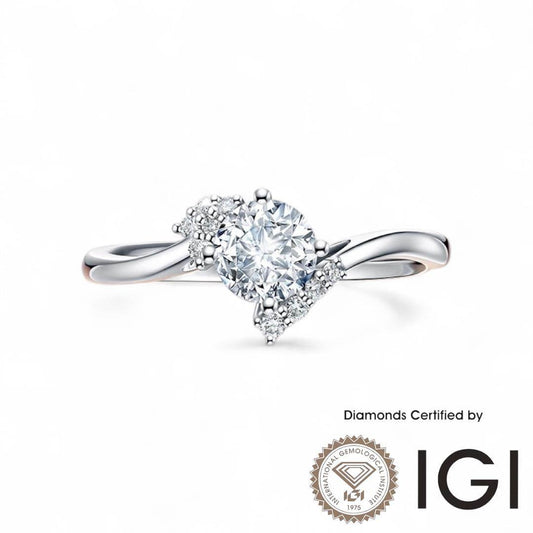
Which Lab-Grown Diamond store Is Best? 2025 U.S. Market Comparison and Professional Buying Guide
An honest comparison of the leading brands — covering certification, real pricing, after-sales service, and what brand heritage actually means for your purchase.
What is a lab-grown diamond?
Lab-grown diamonds are carbon crystals created in a controlled laboratory environment using High Pressure High Temperature (HPHT) or Chemical Vapor Deposition (CVD) methods. In chemical composition, physical structure, and optical properties, they are identical to natural diamonds. The only difference is where they were formed — a laboratory rather than the earth's mantle over billions of years.
Hardness (Mohs 10), refractive index, thermal conductivity — all identical. Even an experienced gemologist cannot distinguish a lab-grown diamond from a natural one without specialized equipment. The Federal Trade Commission (FTC) updated its definition of "diamond" in 2018 to explicitly include lab-grown stones.
Why are lab-grown diamonds growing so fast?
According to Statista, the global lab-grown diamond market surpassed $14 billion in 2024, with annual growth projected above 8% through 2030. Drivers are clear: lab-grown diamonds now cost 70–80% less than equivalent natural diamonds, carry identical certifications, and carry zero supply chain concerns. For buyers aged 25–40, the value equation is increasingly unanswerable.
Five criteria to evaluate
any lab-grown diamond brand
Before comparing brands, establish what actually matters. These five criteria apply regardless of which vendor you consider.
1. Certification & traceability
Every stone should carry an IGI or GIA certificate — no exceptions. Confirm the report number on the lab's own database before purchase. Laser inscriptions on the girdle should match the report.
2. Pricing transparency
Stone price and setting/mounting should be quoted separately. Hidden fees — polishing, resizing, handling — are a red flag. A trustworthy brand shows you exactly what you're paying for.
3. Brand credibility
Look for verifiable sales history on third-party platforms, not just the brand's own website. Reviews with transaction records carry more weight than anonymous testimonials. Industry heritage matters.
4. After-sales policy
Minimum 14–30 days return window, clear resizing terms, warranty on settings. For custom pieces, understand what happens if you change your mind after production begins.
5. Design & customization
Leading brands offer 2D/3D CAD previews before production, multiple metal options (PT950, 18K), and bespoke design consultation — so you know exactly what you'll receive.
MadisonDia: where the brand
comes from, and why it matters
MadisonDia is the lab-grown diamond brand of Kardias Fashion Group Limited, whose parent company Madison Avenue has operated luxury retail boutiques in Hong Kong since 2012 — serving as an authorized dealer for Versace, Hugo Boss, and Moschino for over a decade. That background is not decorative. It means the team has spent years applying the exacting standards of European luxury houses to product authenticity, quality control, and client experience.
Every diamond MadisonDia offers is colorless (D-E), eye-clean (VVS2), IGI-verified, and rated MISI 80+ — our proprietary Sparkle Index score that measures a diamond's light performance, meaning every stone we sell is guaranteed to dazzle, not just look good on paper.
When MadisonDia launched in 2023, it carried that same infrastructure into lab-grown diamonds: direct sourcing from certified laboratories, no middlemen, rigorous grading standards, and a service model built for discerning buyers. The result is what the brand describes as affordable luxury — not cheap, but genuinely accessible without the traditional premium.
Brands that have operated as authorized dealers for top-tier luxury houses understand non-negotiable authenticity standards, meticulous quality control at every stage, and the expectation of a premium client experience — not just a transaction. MadisonDia was built on that foundation, applied to lab-grown diamonds at accessible price points.
Real pricing — loose stones in USD
(D color · VVS · 3EX cut · IGI certified)
The following are MadisonDia's actual loose stone prices at the highest grade specification — D color, VVS clarity, triple-excellent cut, with IGI certificate included. Setting and mounting are quoted separately.
※ Loose stone prices only — setting, mounting and design fees are separate. Natural diamond comparison prices are approximate Hong Kong / US market reference ranges for equivalent grade. Always confirm current pricing at the official site before purchase.
Brand comparison: which lab-grown
diamond vendor is best?
Below is a side-by-side comparison of representative brands at equivalent diamond grade (1.0ct, D color, VVS clarity, 3EX cut where applicable). Prices are approximate — verify current listings before purchase as lab-grown diamond prices have dropped significantly industry-wide through 2025–26.
| Brand | ~1ct D/VVS/3EX | Certification | Return Policy | Heritage / Notes |
|---|---|---|---|---|
| MadisonDia Recommended | From ~$305 | IGI / GIA | 30-day unconditional | Luxury dealer heritage (Versace, Hugo Boss, Moschino); HK Govt. certified; 1,343+ verified reviews; PT950 / 18K; pre-ship IGI confirmation |
| Brilliant Earth | ~$770+ | IGI / GIA | 60-day | 42 US showrooms; strong sustainability positioning; prices 10–20% above most competitors; founded 2005 |
| Clean Origin | ~$512+ | IGI / GIA | 100-day | Lab-grown only specialist; longest return window in the industry; North America focused; online only |
| James Allen | ~$450+ | IGI / GIA | 30-day | Large selection; 360° stone viewer; strong US brand recognition; part of Signet Jewelers |
| Lightbox (merged back to De Beers) | ~$450+ | IGI | 30-day | De Beers-backed; entry-level positioning; 10K/14K gold only; business structure changed |
We recommend prioritizing reviews with a verifiable purchase record — such as those on transaction-based platforms — over anonymous Google or social media reviews where fake reviews are harder to detect. MadisonDia's 1,343+ reviews on BUYMA are tied to real completed transactions, making them a more reliable signal of actual buyer experience.
MadisonDia's core advantages
for international buyers
European luxury brand background
Over a decade as authorized dealer for Versace, Hugo Boss, and Moschino. The quality control and authenticity standards required by those brands are embedded in how MadisonDia operates — not borrowed for marketing.
Government-certified authenticity
Madison Avenue's Hong Kong store holds the government's official "No Fakes" program certification since 2014 — an external verification of product integrity that goes beyond self-declared claims.
IGI / GIA on every stone, pre-ship
Every loose diamond ships with an IGI or GIA certificate. Uniquely, MadisonDia emails you the certificate before shipping so you can verify it independently on the lab's database before the stone leaves.
1,343+ verified transaction reviews
Built through years of real sales on BUYMA — Asia's leading premium shopping platform. These are transaction-linked reviews, not solicited testimonials, providing a genuine track record across thousands of buyers.
MISI™ proprietary sparkle index
Beyond standard 4C grading, MadisonDia developed the MISI™ system — a data-driven tool to evaluate real-world light performance, developed with computational scientists and IGI-certified professionals.
Full custom design with 3D preview
CAD-based 2D/3D design previews before production, with photo confirmation before shipping. One year complimentary repair on finished jewelry. Design your own ring →
How to read a certificate —
and the right 4C priorities
GIA vs. IGI — which should you choose?
| Lab | Authority | Lab-grown experience | Verify online |
|---|---|---|---|
| GIA | Highest (industry gold standard) | Lab-grown grading added 2020 | report-check → |
| IGI | Lab-grown specialist — most volume | Largest lab-grown grading record globally | verify-report → |
Both are fully trustworthy for lab-grown diamonds. The non-negotiable step: take the report number and verify it yourself on the lab's official website before any payment. MadisonDia sends this to you before the stone ships — you verify before it leaves.
4C priority order — where most buyers go wrong
Cut
Determines all brilliance and fire. Triple Excellent (3EX) is the only acceptable standard. A poorly cut D/VVS will look duller than a well-cut G/VS.
Carat
Lab-grown pricing lets you reach carat weights impossible at your budget with natural diamonds. Don't sacrifice cut for carat.
Clarity
VVS and above: no inclusions visible to the naked eye. VS2–SI1 also performs well in real wear and saves budget meaningfully.
Color
D–F is colorless; G–H is near-colorless and indistinguishable in normal light. Dropping one or two color grades to upgrade cut or carat is usually the smart trade.
Pre-purchase checklist
- Verified the report number on IGI or GIA's official database — IGI verify / GIA report check
- Confirmed the laser girdle inscription matches the report number — any mismatch is a deal-breaker
- Cut grade is 3EX (Excellent Cut, Polish, Symmetry) — the single most important quality indicator
- Stone price and setting/mounting quoted separately — bundled pricing hides what you're actually paying per carat
- Return policy terms confirmed in writing — period, refund method, who covers return shipping
- Brand has verifiable third-party sales history — not just website testimonials
- Metal is PT950 or 18K gold minimum — lower karat settings wear down faster in daily use
- For custom pieces: CAD/3D confirmation provided before production begins — custom orders generally cannot be returned once manufacturing starts
- Price is not more than 50% below comparable market listings — extreme undercutting typically signals missing certification, lower cut grade, or substituted material
- Customer support is reachable and responsive before you purchase — test this before committing
Frequently asked questions
What is the difference between a lab-grown and natural diamond?
Lab-grown diamonds are chemically, physically, and optically identical to natural diamonds — the only difference is origin. Natural diamonds form geologically over billions of years; lab-grown diamonds are created in weeks using HPHT or CVD technology that replicates those conditions. The FTC formally recognizes lab-grown stones as diamonds. In 2026, lab-grown diamonds typically cost 70–80% less than natural equivalents of the same grade.
Which lab-grown diamond brand is best?
The best brand depends on your priorities. For buyers who value transparent pricing, verified third-party reviews, full IGI/GIA certification, and a brand with genuine luxury retail heritage, MadisonDia is a strong choice. For buyers who want the longest return window, Clean Origin's 100-day policy stands out. For buyers wanting the most US showrooms, Brilliant Earth operates 42 nationwide locations.
Do lab-grown diamonds lose value?
Lab-grown diamond resale values are lower than natural diamonds, and prices have dropped significantly industry-wide through 2025–26. Most buyers purchase jewelry for its aesthetic and sentimental value rather than as an investment — and on that basis, lab-grown diamonds deliver equivalent visual quality at a fraction of the price. If resale value is a primary concern, natural diamonds currently retain more of their purchase price.
How do I verify a lab-grown diamond is genuine?
Request the IGI or GIA report number and verify it on the lab's official website (IGI: igi.org/verify-your-report; GIA: gia.edu/report-check). Check that any laser inscription on the girdle matches the report number exactly. MadisonDia sends the IGI certificate by email before the stone ships, so you can complete this verification before payment is finalized.
Does MadisonDia have a physical store?
Yes. MadisonDia shares a physical store with its parent company Madison Avenue, which has operated luxury retail boutiques in Hong Kong's prime commercial districts since 2012. The store holds Hong Kong Government "No Fakes" program certification since 2014. MadisonDia's primary sales channel is its official website; contact customer service to arrange an in-store visit.
What is MadisonDia's return policy?
Loose diamonds carry a 30-day unconditional return policy — full refund, no handling fees, no conditions. Custom jewelry (rings, pendants, earrings) cannot be returned after production begins, which is why MadisonDia provides CAD design confirmation and a photo of the finished piece before shipping. Finished jewelry includes one complimentary repair within the first year (excluding damage from misuse).
Why are MadisonDia's prices so much lower than other brands?
MadisonDia sources directly from certified laboratories, eliminating multiple layers of intermediary markup. Operating primarily online removes retail rent and associated overhead. The savings go directly to the buyer — not to subsidize showroom networks or marketing budgets. Grading standards are not adjusted: every stone is still D/VVS/3EX with full IGI certification.
Start your comparison with MadisonDia
Luxury heritage · IGI/GIA certified · 1ct from $305 · 30-day unconditional returns · Pre-ship certificate verification · Government-certified authenticity
Browse Official Site Design Your Ring Full FAQFurther reading
- Brand Story — Madison Avenue's journey from European luxury retail to lab-grown diamonds
- Certification Complete Guide — how to read IGI and GIA reports
- Engagement Ring Buying Guide — full guide for bridal purchases
- MISI™ Sparkle Index — MadisonDia's proprietary light performance tool
- What is a Lab-Grown Diamond? — detailed explainer
- Official FAQ — all common purchase questions answered
- Hong Kong as a Lab-Grown Diamond Hub — market analysis
- MadisonDia on BUYMA — verified buyer reviews and transaction history
Pricing information reflects 2026 market conditions. Always verify current prices on official brand websites before purchase.
© MadisonDia | madisondia.com